Landscaping Poplar: Practical Ideas, Plant Choices, and Design Principles for a Beautiful Outdoor Space
 Landscaping Poplar offers a versatile way to create an outdoor space that feels welcoming, functional, and visually balanced. Whether the goal is to improve curb appeal, define property boundaries, add seasonal interest, or build a low-maintenance yard, the right approach can make a major difference. Poplar trees and poplar-inspired landscape elements are valued for their fast growth, straight structure, and ability to bring height and movement into a design. In many settings, landscaping with poplar can support both practical and aesthetic goals, especially when paired with thoughtful plant selection, soil preparation, and space planning.
One reason people look into poplar landscaping is the tree’s ability to make a strong visual statement without requiring a highly complex layout. Poplars can create a sense of enclosure, soften hard edges, and contribute a natural rhythm to larger yards. At the same time, the surrounding plants, paths, borders, and open spaces matter just as much as the trees themselves. A successful design usually combines structure with softness, using layers of color, texture, and height to prevent the yard from feeling flat or overcrowded. In this way, landscape design poplar projects can be both bold and refined.
 Before planting or redesigning any area, it helps to understand the character of the land. Sun exposure, wind patterns, soil drainage, and available space all influence the outcome. Poplars generally do best where they have enough room to grow, because many varieties can become tall and broad over time. Crowding them too close to structures or other large trees can cause problems later. For that reason, landscaping with poplar trees should always begin with a realistic view of mature size, root spread, and long-term maintenance needs. This planning stage is one of the most important parts of creating a landscape that stays attractive over the years.
There are also many reasons poplars appeal to homeowners, property managers, and designers. Their rapid growth can help establish a new landscape faster than slower-growing species. Their upright form can bring vertical emphasis to a flat yard, while their leaves add motion and sound in the breeze. In some areas, poplars are used to create windbreaks, privacy screens, or transitional borders between open land and more intimate garden spaces. Because of this flexibility, poplar yard landscaping can be adapted to rustic, modern, naturalistic, or more formal design styles.
However, it is important to approach poplar tree landscaping with an informed perspective. Poplars are not always the right choice for every site, and their benefits should be weighed alongside their characteristics. Some species grow quickly but may have weaker wood or shorter lifespans than slower-growing trees. Others may drop leaves or debris at certain times of year, creating more cleanup. By understanding both the advantages and the trade-offs, it becomes much easier to build a plan that works well in the real world and remains visually appealing across seasons.
 A strong landscape begins with structure, and poplars can provide that structure in several ways. When placed thoughtfully, they can act like living columns, helping guide the eye across a property. This is especially useful in wide-open spaces where the land feels too exposed or undefined. Landscaping around poplar trees often includes lower shrubs, perennial flowers, ornamental grasses, and groundcovers that fill the space beneath and around the canopy. The result is a layered composition that feels intentional rather than random. In larger properties, poplars can also be grouped to create visual repetition, which brings cohesion to the overall layout.
Color and texture play a major role in the success of any outdoor design. The gray-green foliage of many poplar varieties pairs well with silver-leaved plants, deep green evergreens, and flowering species that add seasonal brightness. To avoid monotony, it is smart to combine broadleaf plants with fine-textured materials such as grasses or small shrubs. This contrast keeps the design lively. In landscaping with poplar, the tree’s vertical line can be balanced with rounded shrubs, spreading perennials, and soft edging plants, creating a setting that feels natural yet orderly.
Soil health is another essential factor. Poplars often perform best in soil that drains well but still retains enough moisture to support strong root development. Before planting, many landscape plans benefit from improving the ground with organic matter, especially if the existing soil is compacted, sandy, or nutrient-poor. Healthy soil supports better establishment and helps surrounding plants thrive as well. A poplar landscape design becomes more sustainable when the ground is prepared to support long-term growth rather than short-term visual results only.
Maintenance should always be considered when choosing trees and companion plants. While poplars can grow quickly, their fast development may require monitoring to ensure they remain healthy and stable. Regular inspection can help identify dead branches, stress symptoms, or structural issues before they become larger problems. Surrounding plants should also be selected with maintenance in mind. For example, drought-tolerant perennials and durable shrubs can reduce the need for frequent watering and make the overall landscape easier to care for. In poplar tree landscaping, simplicity often leads to better long-term results than overly complicated planting schemes.
Another useful design principle is rhythm. Repeating certain plants, shapes, or materials throughout the yard can give the space a sense of flow. For example, a row of poplars can be echoed by repeating ornamental grasses or a consistent border plant at ground level. Stone edging, mulch bands, and gravel transitions can further enhance this feeling of continuity. When done well, landscaping poplar areas do not feel forced; instead, they appear naturally connected from one section to the next. That is one reason the style works so well in both residential and larger estate-like settings.
At the middle of the plan, hardscape elements such as patios, pathways, retaining walls, and seating areas can help connect the tree planting to everyday use. A bench beneath a line of poplars can create shade and rest, while a path nearby can make the area easier to enjoy. The key is to preserve enough space for the trees to grow without overwhelming the hardscape. Landscape design with poplar trees works best when the built and planted elements support one another rather than compete. The result is a yard that feels both practical and calm.
One of the most attractive qualities of poplars is their ability to work in different design moods. In a modern landscape, their clean form can reinforce straight lines and minimalist planting. In a rural or natural setting, they can blend into broader environmental patterns and add a sense of movement. In a formal yard, they can serve as a repeated architectural feature that provides balance and symmetry. This adaptability makes landscaping with poplar trees appealing across many property types. The same basic tree can contribute to dramatically different looks depending on how it is surrounded and arranged.
Seasonal change is another reason to consider poplar-centered design. Spring may bring fresh leaves and renewed growth, summer can offer shade and fullness, autumn often produces strong color changes, and winter reveals the tree’s framework more clearly. That year-round presence is especially valuable in landscapes that need structure even when flowers are not in bloom. Pairing poplars with evergreen shrubs or winter-interest plants can keep the yard from looking bare in the colder months. A thoughtful poplar landscaping plan takes all four seasons into account rather than focusing on only one period of the year.
Spacing is critical, especially if the goal is to create privacy or a windbuffer. Trees planted too closely may compete for light, water, and nutrients, while trees planted too far apart may fail to create the desired visual effect. The best spacing often depends on the species, the site, and the purpose of the planting. For a screen, poplars may be arranged in a pattern that allows them to form a continuous line over time. For a more open look, individual trees can be used as accents rather than a full row. In either case, landscaping poplar trees should prioritize healthy development as much as style.
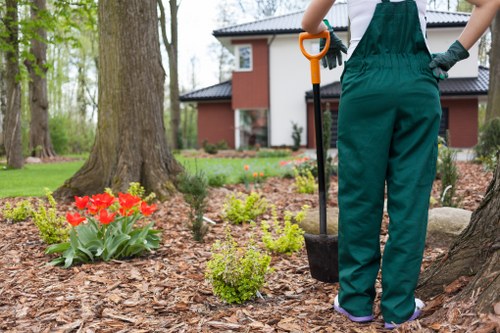 The area beneath poplars can also be transformed into a beautiful planted layer instead of remaining unused space. Shade-tolerant or adaptable groundcovers, low shrubs, and woodland-style perennials can help soften the transition between trunk and lawn. This lower layer contributes to a richer, more complete composition. Mulch can be useful as well, both for moisture retention and for giving the planting area a neat appearance. In many cases, poplar tree landscaping becomes far more polished when the base of the tree is integrated into the design rather than left isolated.
Water management should not be overlooked. Depending on the site, poplars may prefer consistent moisture, but standing water can still create problems if drainage is poor. On sloped sites, careful grading may be needed to prevent erosion around newly planted trees. In flatter areas, irrigation habits should support deep watering rather than shallow, frequent wetting. A smart poplar landscape design keeps water movement in mind, especially in locations that experience heavy rain or dry summers. By balancing moisture and drainage, the planting area becomes healthier and more resilient.
Native and climate-appropriate companion plants are also worth considering. When surrounding species are suited to the same conditions as the poplars, the whole landscape tends to require less intervention and perform better over time. Plants that match the local climate can reduce stress, improve habitat value, and support pollinators or birds. This makes the landscape not only attractive but ecologically useful. In many settings, landscaping around poplar trees can become part of a broader approach to sustainable yard planning. Choosing plants that are compatible in form, water needs, and growth habits leads to a more cohesive result.
It is also helpful to think about how the landscape will look from different viewpoints. A yard is rarely seen from just one angle. People may view it from a driveway, a kitchen window, a patio, or the street. Poplars can be positioned to improve these views, hide less attractive areas, or frame a distant feature such as a garden bed, shed, or open meadow. By studying sightlines, a designer can place trees where they enhance the entire property rather than only one small section. This is one reason landscaping with poplar can be both artistic and functional.
Texture variation becomes especially important when poplars occupy a large portion of the visual field. Because the trees themselves may share similar trunk and leaf forms, surrounding plants should introduce contrast. Fine grasses, broad-leaved shrubs, flowering perennials, and evergreen mounds all contribute different visual weights. Stone, wood, and gravel can add another layer of texture. In a balanced design, the eye moves naturally from one form to another. That variety helps prevent the landscape from feeling repetitive and makes the tree planting appear more sophisticated.
For properties with open boundaries, poplars can help create a sense of place. A well-placed line of trees can define an edge without making the space feel closed in. A few specimen trees can give a vast yard more personality and direction. In that sense, poplar yard landscaping is not only about adding greenery; it is about shaping how the whole property is experienced. The right arrangement can make a broad outdoor space feel more welcoming, more organized, and more connected to the home.
Incorporating wildlife-friendly elements can further enrich the design. Birds may use poplars for perching or shelter, while understory plants can provide habitat and food sources for insects and pollinators. This ecological dimension adds life and movement to the landscape. Care should be taken, of course, to avoid introducing invasive species or creating plant combinations that become overly competitive. A thoughtful approach to poplar tree landscaping can support beauty, biodiversity, and balance all at once.
One useful way to think about the project is in terms of layers. The upper layer is the tree canopy, the middle layer may include shrubs and taller perennials, and the lower layer often consists of groundcovers, mulch, or lawn. Each level plays a role in shaping the final impression. Poplars naturally fill the upper layer with strength and height, while the layers below can introduce softness and color. This layered method works especially well when the design needs to feel full without becoming cluttered. It gives the yard a sense of depth that plain open grass cannot provide.
For homeowners who prefer a cleaner, more restrained look, poplars can still fit beautifully into minimalist landscapes. A few well-chosen trees, simple edging, and limited plant varieties may be all that is needed. In these designs, the tree form becomes the main feature, and the supporting plants are selected to emphasize rather than compete with it. The result can be elegant and modern. Landscaping poplar trees in this style often relies on strong geometry, restrained color, and careful spacing, proving that simplicity can be just as powerful as abundance.
 As the landscape matures, small adjustments may be needed to preserve the original intention. Plants grow, light changes, and some areas become more shaded or more exposed than before. A successful design accepts that evolution and anticipates it. Pruning, replanting, and occasional redesign of smaller sections can keep the whole property looking fresh. In this way, landscaping with poplar is not a one-time event but an ongoing relationship between the site, the plants, and the people who use the space.
Many people also appreciate the sense of scale that poplars bring. In a small yard, one tree can provide a focal point and a feeling of vertical space. In a larger landscape, several poplars can create a dramatic corridor or backdrop. Because they grow with such presence, they can anchor the entire design. When surrounded by thoughtfully chosen plants, the effect is powerful but still harmonious. This combination of scale and softness is one of the reasons poplar landscape design remains popular in many regions.
Another advantage is that poplars can help frame outdoor activities. A dining area, play space, quiet garden corner, or open lawn can all be visually enhanced when trees are used to define the edges. This framing effect gives each part of the property a clearer purpose. Rather than viewing the yard as one large undifferentiated zone, people experience it as a series of connected spaces. In that sense, landscaping around poplar trees helps organize outdoor life in a subtle but effective way.
Careful material selection can make these spaces even stronger. Natural stone, timber, decorative gravel, and mulch all complement the organic character of poplars in different ways. A rustic environment may favor rougher textures and earth tones, while a more refined setting might use cleaner lines and muted materials. The important thing is consistency. When the materials and plants speak the same visual language, the landscape feels unified. This is a major reason why landscaping with poplar trees continues to appeal to designers who want both impact and coherence.
It is also worth recognizing that not every poplar planting needs to dominate the yard. Sometimes the most effective use of the tree is as a supporting feature in a broader composition. A single specimen near a corner can add height without overpowering nearby plantings. A pair of trees can create balance near an entry path or driveway. A longer row can shape a boundary or emphasize a distance line. The versatility of poplars means that many layouts are possible, provided the design remains grounded in proportion and purpose.
Ultimately, successful landscaping poplar projects are built on the relationship between tree, site, and surrounding design elements. The trees bring strength, movement, and vertical interest. The companion plants add color, softness, and seasonal variety. The hardscape organizes movement and use. Together, these parts create a landscape that feels thoughtful and enduring. With the right balance of function and beauty, the result can be more than just a planted area; it can become a complete outdoor environment that enriches daily life.
For anyone considering a new planting plan, the best results usually come from looking beyond appearance alone. Growth habits, soil conditions, spacing, seasonal change, and maintenance needs all affect the final outcome. By respecting those realities, it becomes easier to create a landscape that performs well and looks attractive for years. That is the real value of poplar landscaping: it blends speed, structure, and versatility in a way that can suit many kinds of properties and design intentions.
In the end, landscaping poplar is about more than choosing a tree. It is about creating a living framework that supports the entire outdoor space. Whether the goal is privacy, shade, beauty, or a stronger sense of structure, poplars can contribute meaningfully when they are placed with care. Paired with the right plants and materials, they help turn ordinary ground into a landscape that feels organized, inviting, and alive.
When planned well, landscaping with poplar can deliver both immediate impact and long-term satisfaction. The key is to respect the tree’s growth, match it with suitable companions, and allow the design to breathe. With those principles in place, the finished space can be elegant, practical, and deeply enjoyable through every season.